
International Law Thesis Topics in Pakistan: Treaties, Court Orders and UN Filings You Can Read at the Source

I need answers to these before I pick a topic:
- Which treaty article, award or UN document will my research question rest on?
- Is that instrument in force for Pakistan, only signed, or already ended?
- Can I read the full text myself, or only a news report about it?
- Does my supervisor expect doctrinal analysis, case coding or a comparison with one other state?
- Will the position still stand on the day I defend, or is a decision pending?
International law is wide, so these twelve topics stay with Pakistan’s own treaty duties, trade and investment, courts that apply treaties, and climate, rivers and sea. The Indus Waters Treaty, the Reko Diq reference and the Afghan refugee notice already appear in the wider list of law thesis topics, so they are left out here. Every topic below names a document you can open. Topics tied to live events carry a dated note, because a chapter built on a superseded position has to be rewritten.
Start with the source, not the subject
A topic works when you can name the document it stands on. “Pakistan and the WTO” names none. “Whether Pakistan’s appeal in dispute DS538 left a panel report in limbo” names one. The table shows where each kind of topic finds its text, and what to fix before you begin.
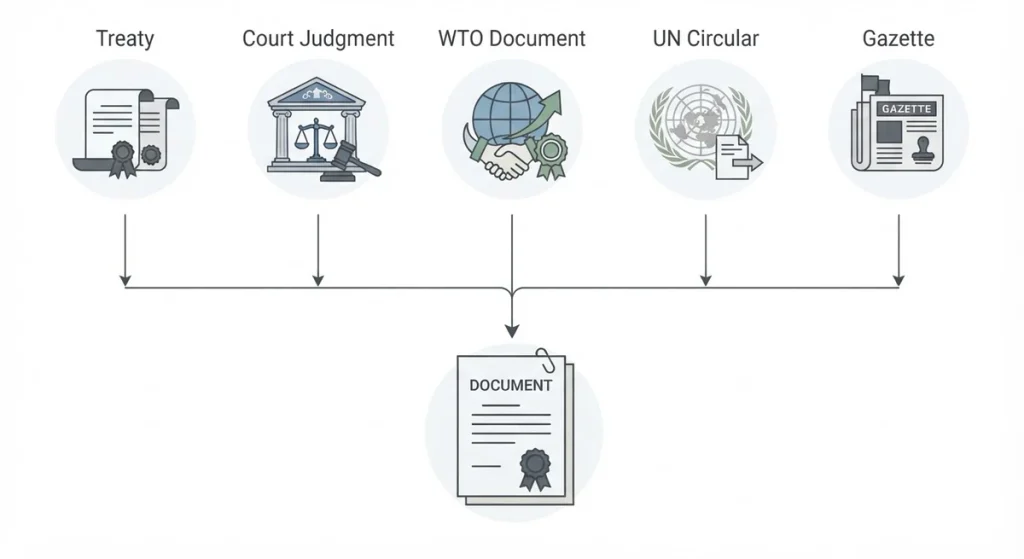
Source route for each kind of topic
| Kind of topic | Where the primary text sits | Fix this first |
|---|---|---|
| Treaty reservations and objections | The UN Treaty Collection entry and each State’s objection text | The treaty, the ratification date and the day you read the entry |
| Awards, custody and detention cases | Full judgments of the Supreme Court, the Federal Constitutional Court or a High Court | The court, the date and whether an appeal is pending |
| WTO and EU trade documents | WTO dispute documents and the EU regulation or Commission report | The document symbol, for example WT/DS538/R |
| Law of the sea filings | UN circulars and notes verbales on the UN ocean affairs site | The circular number, for example M.Z.N. 168.2025.LOS |
| Statutes and executive orders | The Gazette text or an official consolidation | The amendment level you are reading |
Before you commit, also check what earlier scholars wrote on your instrument. The HEC repository guide shows how to search past theses, and it saves you from rebuilding an argument that already exists.
Twelve international law thesis topics
Each topic gives a question, a suitable level, the evidence route and one risk to watch. Numbering runs through the whole list. LLB final-year students can take the case-coding versions, while LLM, MPhil and PhD students can take the analytical ones. If your interest lies in other subjects, the full thesis topics directory lists them.
Treaty promises, detention and sanctions
These three topics test what Pakistan promised in treaties against what its own instruments say.
1. Pakistan’s remaining ICCPR declarations on Articles 3 and 25
Pakistan ratified the International Covenant on Civil and Political Rights on 23 June 2010, with declarations on nine articles. On 20 September 2011 it told the UN Secretary-General that it was partly withdrawing them. Reports describe the declarations on Articles 6, 7, 12, 13, 18, 19 and 40 as withdrawn. Those on Articles 3 and 25 were only partly withdrawn. A treaty-body site that mirrors the UN entry shows what remains. Article 3 is applied in conformity with personal law and the Qanun-e-Shahadat. Article 25 is made subject to Articles 41(2) and 91(3) of the Constitution. The mirrored entry also reproduces the objections of Austria, Canada, Germany, the United Kingdom, the United States and many others, all dated June 2011.
The question for an LLM or PhD student is whether these two declarations still look like the vague, general reservations those States attacked. Test them against Article 19(c) of the Vienna Convention on the Law of Treaties. An LLB student can instead code the objections by ground. Then check whether any objector repeated or withdrew its objection after the partial withdrawal. Position correct as of November 2026; read the current UN Treaty Collection entry before you write.
2. Common Article 3 and the Actions (in Aid of Civil Power) Regulations 2011
The President issued the Regulations on 23 June 2011 for the former FATA and PATA. On 17 October 2019 the Peshawar High Court struck down the Khyber Pakhtunkhwa ordinance that continued them. The Supreme Court suspended that ruling a week later. At a hearing reported on 15 November 2019, Justice Umar Ata Bandial told the Attorney General that even a detained enemy has a right of defence under the Geneva Convention. In November 2025 the provincial cabinet approved withdrawing its own petition. However, Dawn reports that the federal government remains the main appellant.
The question for an LLM or PhD student is how the internment, oversight and evidence provisions measure up. Test them against common Article 3 and Article 9 of the ICCPR. Pakistan never reserved Article 9, so topic 1 gives you a useful contrast. Stay with the Regulations’ text and the court orders. Claims about conditions inside centres are allegations until a court finds otherwise, such as those quoted from the petitioner’s lawyer in this Nukta report. Position correct as of November 2026. Troops were called in aid of civil power across Khyber Pakhtunkhwa under Article 245 in October 2026, so recheck which court now hears what.
3. Exemption and delisting under the UNSC (Freezing and Seizure) Order 2019
S.R.O. 261(1)/2019 of 4 March 2019 implements Security Council sanctions under section 2 of the United Nations (Security Council) Act 1948. The Order requires anyone in effective control of a listed person’s property to freeze it without delay. A seizing agency must then notify the affected person within forty-eight hours of its report. Its exemption route for basic expenses runs through the Foreign Ministry, which notifies the UN Committee through the Permanent Mission. Its delisting route sends the petitioner to the UN Ombudsperson. As read, the Order names no appeal to a Pakistani court.
An LLM student can ask whether Article 10A and a writ under Article 199 therefore do the work. Then check whether any High Court judgment has tested a freeze under this Order. Later S.R.O.s, such as the 2024 order that records a delisting after Ombudsperson review, show how the system runs in practice. Fix the date of every list you cite, because entries change often.
Trade, investment and arbitration
Students who prefer market data to treaty text can start with economics thesis topics. The three below suit an LLM or MPhil student with a commercial supervisor.
4. Labour inspection and the 32-convention GSP+ list
Regulation (EU) 2026/1395 was published on 22 June 2026. It applies from 1 January 2027, covers 32 conventions instead of 27, and allows preferences to be withdrawn for serious and systematic violations. The fifth monitoring report, SWD(2026) 184 final of 16 July 2026, covers 2023 to 2025. An Islamabad think tank’s tracker lists the ILO Labour Inspection Convention (C81) among the additions and says the report records fewer than 600 inspectors. Pakistan’s Foreign Office called the report unbalanced on 23 July 2026.
The question is how the report counts an inspector and which provinces it covers. Then ask how its figure compares with the ILO’s own comments on Pakistan’s application of C81. Treat the tracker as a summary, and confirm the number in the report itself. Check the regulation for the reapplication deadline too, because sources describe it as the end of 2028. Position correct as of November 2026; the European Commission’s update on the scheme is the place to confirm current steps.
5. Withdrawing a termination notice: Pakistan, Sweden and the 1981 treaty
The Pakistan-Sweden investment treaty was signed in March 1981 and entered into force that June. Arab News reported that either side may end it on one year’s notice, and that a survival clause protects earlier investments for another twenty years. Pakistan had served a notice under its 2021 treaty strategy. Reports on the withdrawal differ. Arab News dated the cabinet’s withdrawal to 10 August 2026. In contrast, The Express Tribune of 29 August described the cabinet as still ordering revocation and forming a committee. The end date appears as both 28 and 29 September 2026. By October, Tribune reported that the treaty would stay in place.
The question for an LLM or PhD student is simple. Can a notice given under a treaty’s own termination clause be withdrawn without the other party’s agreement? Does Article 68 of the Vienna Convention help, given that it speaks of notifications under other articles? Check first whether you rely on the Convention or on custom. Then fix each date from the official cabinet record and Sweden’s own response.
6. DS538 and an appeal into the void
The United Arab Emirates challenged Pakistan’s anti-dumping duties on BOPP film at the WTO in January 2018. A panel was established on 29 October 2018 and composed on 7 May 2019. The US trade representative’s case summary records those steps and still lists the dispute as pending. The panel report of 18 January 2021 found the April 2015 determination and the December 2016 sunset review inconsistent with the Anti-Dumping Agreement. It suggested withdrawing the measures without a refund. Pakistan notified an appeal in February 2021. Because the Appellate Body has been unable to hear appeals, commentators describe such appeals as going “into the void”.
The question is what legal status the report has and what Pakistan owes meanwhile. Has its tariff body changed the measure since? Evidence: WT/DS538/R, the notice of appeal WT/DS538/5, the WTO’s dispute page and the National Tariff Commission’s notices. Check the appeal date in the notice itself, because summaries give two dates in February. Position correct as of November 2026; recheck the WTO page before you submit.
Courts, custody and criminal cooperation
Here the international rule meets a Pakistani judge. Each topic can be done as a decision-coding project, so each suits LLB final-year work as well as LLM work.
7. Article V of the New York Convention after Taisei
In a judgment reported on 3 March 2024, a three-judge Supreme Court bench headed by Justice Syed Mansoor Ali Shah held something narrow. Public policy can block a foreign award only where it would offend “most basic notions of morality and justice”. The Court added that this ground cannot reopen the merits. On 4 December 2024, in SpaceCom v Wateen Telecom, the Lahore High Court refused recognition of DIFC-LCIA awards under Article V(1)(d). It reasoned that the seat was onshore Dubai, not the DIFC, and that it was bound to refuse once a ground applied. A Pakistani advocate’s analysis argues that this reading clashes with the Supreme Court’s view that Article V is permissive.
The question is whether a refusal under Article V(1)(d) survives that view. A firm’s note gives you a contrast. It says the Sindh High Court recognised a SIAC award on 12 September 2025 after objections under Article 10A and Article V(2)(b). Code every reported decision under the 2011 Act since March 2024 by ground and outcome. Read full judgments, not summaries, and check whether SpaceCom was appealed.
8. Hague return or custody order? The FCC guidance of September 2026
Pakistan signed the 1980 Hague Child Abduction Convention in December 2016. It took effect on 1 March 2017, according to a presentation by Pakistan’s focal person. A Sindh High Court case later turned on a North Carolina custody order. One commentator argued that the court leaned on section 13 of the Civil Procedure Code rather than on the Convention’s own provisions. On 3 September 2026, The Express Tribune reported an eight-page Federal Constitutional Court judgment by Justice Ali Baqar Najafi. It says a wrongfully removed child should return to the state of habitual residence unless settled. It adds that a court should not decide custody merits before deciding on return.
The question is whether reported Sindh and Lahore decisions since 2017 order return under the Convention or enforce a foreign custody order through section 13. Then ask whether the new guidance changes that. Use anonymised case references and leave the children’s names out. Obtain the judgment from the court itself, because the news report is a short summary.
9. What the 2021 amendment removed from the Mutual Legal Assistance Act 2020
Act XXII of 2020 received assent on 11 August 2020. In the consolidation updated to 23 September 2021, the Interior Secretary is the central authority. Section 17 lets that authority refuse a request on listed grounds. One ground is a violation of international human rights conventions. Act XI of 2021 omitted section 17(1)(d) and marks an omission in section 5(1). Section 26 requires the central authority to lay statistics before both houses every six months. A search excerpt of the 2020 text also shows a proviso on notice to the person concerned, so confirm whether that proviso survived.
The question for an LLM student is what the amendment took out. Does what remains protect the person whose data or assets are requested? Obtain the Gazette copies of both Acts and compare them line by line. Then ask for the section 26 statistics. Link the human rights ground back to topic 1, since the ICCPR duties it relies on are the same ones.
Climate, rivers and sea
These three topics use UN and court documents that anyone can download.
10. Pakistan at the ICJ: lex specialis and “specially affected States”
Pakistan filed written submissions in the climate change advisory proceedings. Attorney General Mansoor Usman Awan spoke on 9 December 2024. In its reply of 20 December 2024 to Judges Charlesworth and Tladi, Pakistan made two arguments. Declarations by Pacific and other States on joining the climate treaties drew no objection, it said, and so bar a new customary rule from forming out of treaty text. It also argued that “specially affected States” does not mean powerful States. The Court’s unanimous opinion of 23 July 2025 rejected lex specialis in paragraphs 162 onward. It applied the duty to prevent harm to the climate system, according to an ASIL Insight.
The question for an LLM or PhD student is which of Pakistan’s two arguments you can trace into the Court’s reasoning. The same Insight says the Court did not treat vulnerability as carrying particular legal consequences. That is a different point from custom formation, so read the paragraphs yourself. Trace each step to the opinion’s own text and number the paragraphs.
11. The Kunar River when no basin treaty exists
On 24 October 2025, reports said Afghanistan’s Taliban authorities ordered dam construction on the Kunar River. The river flows from Chitral into Afghanistan and then joins the Kabul River. A Dawn opinion by Aisha Khan of 17 November 2025 notes that no comprehensive treaty governs the basin. It offers estimates, such as a possible cut of about three million acre-feet a year. These are one writer’s figures, not measured data.
The question is which customary rules govern a claim between two States without a basin treaty. Then ask how you would test equitable and reasonable use, and the duty not to cause significant harm, against facts. Pakistan’s own ICJ reply cites the Silala judgment on prevention, so start there. Check on the UN Treaty Collection whether either State is party to the 1997 Watercourses Convention. An announcement is not construction, so state what was verifiably built when you submit. Treat the question of which authorities speak for Afghanistan in a short separate section.
12. India’s April 2025 baseline notification and Pakistan’s note verbale
India’s notification G.S.R. 216(E) of 2 April 2025 listed baseline points, and the UN circulated it as M.Z.N. 168.2025.LOS on 24 April 2025. In a note verbale of 30 October 2025, Pakistan said India’s base points 1 and 2 at Sir Mouth impinge on its Sir Creek territorial waters. It said they breach Article 7(6) of UNCLOS. The note repeats Pakistan’s objection of 2011. For context, the UN’s Pakistan file records a chart of Pakistan’s own outer shelf limits deposited in September 2016.
The question is whether Article 7(6) reaches a baseline whose points sit at a contested creek mouth. Do not try to settle where the boundary runs. Analyse what each filing asserts, and keep coordinates in an appendix. Evidence: the two UN circulars, the note, UNCLOS Article 7 and the Territorial Waters and Maritime Zones Act 1976.
Match the topic to your level
LLB final-year projects do well with one filing or one judgment, as in topics 6, 7 or 8. Under the HEC Graduate Education Policy 2023, an MS or MPhil carries either thirty credit hours of coursework or twenty-four plus a thesis of at least six. Each university frames its own defence rules. Read the MPhil thesis guide for the stages. A PhD topic needs an original contribution, often a comparison with a second State or a theory test, as in topics 1, 5 and 10. Position correct as of October 2026. Check HEC and your university for current rules, and see the PhD thesis format and length guide for structure. If you need doctoral planning help, PhD thesis help covers chapters and supervision.
Narrow a broad idea in five steps
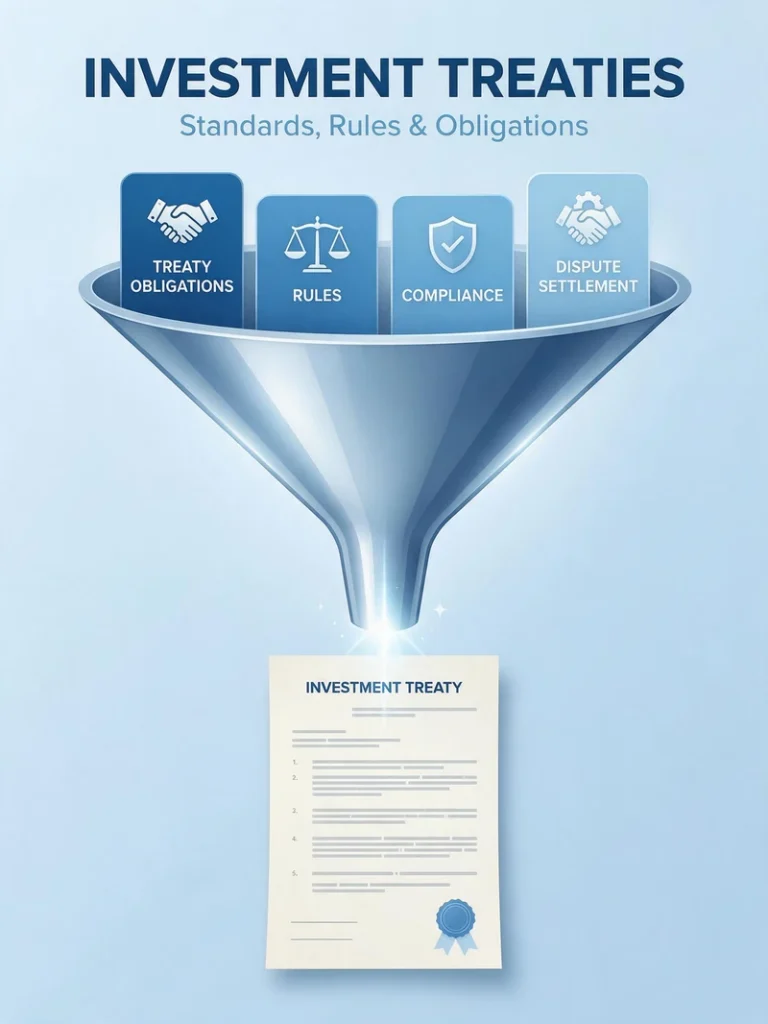
Take “Pakistan’s investment treaties”, which is far too wide. Topic 5 shows how to cut it down.
- Pick one instrument. Here, the 1981 Sweden treaty replaces the whole network.
- Fix the window. Here, the notice, the cabinet decisions and the revocation.
- State one legal question. Here, whether a notice under the treaty’s own clause can be withdrawn alone.
- List five documents you can open: the treaty text, the cabinet record, Sweden’s reply, the UNCTAD entry and one academic article.
- Name what your thesis adds beyond summary, such as a reading of Article 68 or the survival clause.
If you cannot list the five documents within a week, choose a narrower instrument. The research methodology guide helps you decide between doctrinal and case-coding designs.
Four mistakes that sink an international law thesis early
Treating a news report as the treaty text
News reports often drop the clause that matters. Use news to find the document, then cite the document.
Mixing counts from different dates
Counts of investment treaties change. In 2021 officials said Pakistan had signed 53, with 32 in force and five terminated, according to Dawn’s report of 22 October 2021. By August 2026 cabinet papers cited terminations with 25 countries. Date every figure.
Treating a pending case as decided
The internment cases, the DS538 appeal and some arbitration enforcement appeals can all change. Write what a court held, then note what is still open.
Resolving a dispute your question does not need
A thesis on an Article 7(6) note does not have to decide the Sir Creek boundary. Define what you will not decide, and say so early.
Questions students ask
Do I need ethics approval if I only read treaties and judgments?
Document-only work usually needs none, but your department decides. Interviews with officials or access to case files need approval from your university before you start.
How do I cite a treaty, a note verbale or a UN circular?
Cite the official identifier: the treaty series number, the M.Z.N. circular or the ICJ document number. Follow the citation style your department sets, such as OSCOLA, and record the date you accessed each online entry.
Can I compare Pakistan with another State?
Yes, and many PhD supervisors expect it. Choose one comparator with accessible primary texts, and explain why that State fits your question.
Next step
Shortlist two topics and run the five-document check on each. Then bring the survivor to your supervisor with the documents in hand. The topic selection guide and the research proposal guide carry you from a shortlist to a proposal.
If a chosen topic needs shaping into a proposal or a chapter plan, send your details through the order form. Support is available 24/7, every day of the year, on WhatsApp, email and live chat. Any work produced is for reference and learning, and should be used according to your institution’s policy.