
Climate Change Thesis Topics: 30 Pakistan-Focused Research Ideas
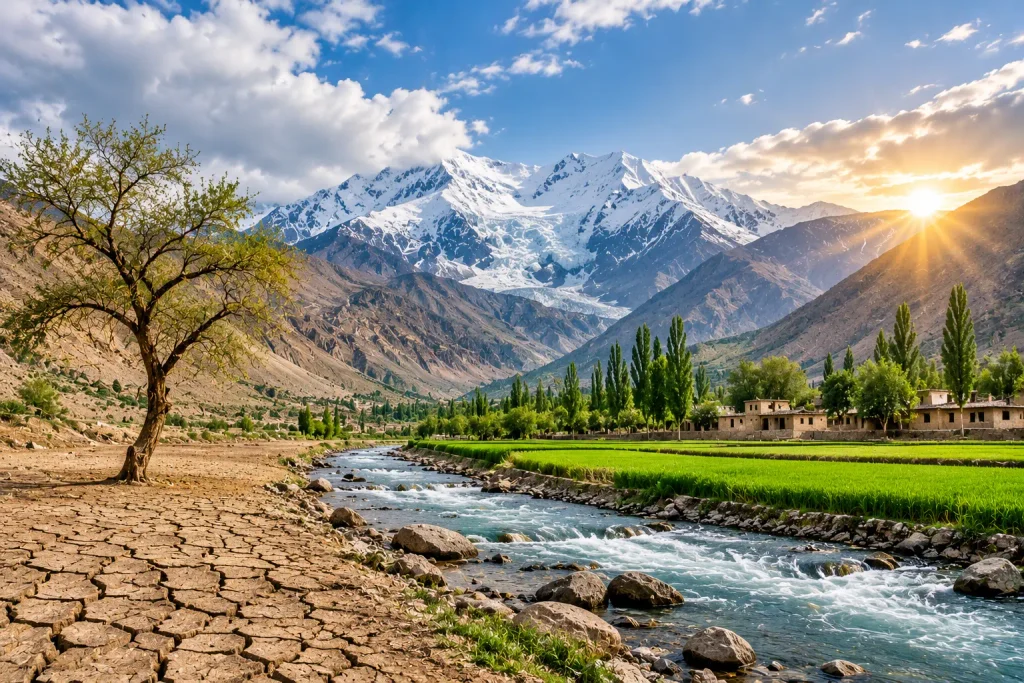
Are you interested in studying the effects of climate change on Pakistan’s agriculture, water resources, public health or economy? Do you want to investigate changing rainfall patterns, urban heat, glacier retreat or flood risks? Perhaps you are unsure which climate change issue can become a focused and manageable thesis.
Climate change is a wide research area. A strong thesis needs a specific location, population, time period, environmental factor or policy question. For Pakistani students, this could mean studying heat exposure in Karachi, groundwater stress in Punjab, crop productivity in Sindh or flood preparedness in selected districts.
The following climate change thesis topics focus on researchable questions and Pakistan-based evidence. They are suitable starting points for BS, MS, MPhil and PhD research, depending on the depth and methods required.
Climate Change Thesis Topics in Pakistan
1. Historical Changes in Summer Temperature in Karachi Between 1991 and 2025
This study can examine whether summer temperatures in Karachi have changed over the selected period. It can focus on monthly maximum and minimum temperatures, seasonal averages and the frequency of unusually hot days.
- Possible research question: How have summer temperature patterns in Karachi changed between 1991 and 2025?
- Suggested method: Quantitative time-series analysis.
- Evidence: Pakistan Meteorological Department temperature records.
- Suitable level: BS or MS.
2. Changes in Monsoon Rainfall Variability Across Selected Districts of Punjab
Instead of studying rainfall across the entire country, this research can compare monsoon rainfall patterns in three or four selected Punjab districts. It can examine changes in rainfall distribution, unusually wet periods and seasonal variability.
- Possible research question: How has monsoon rainfall variability changed across selected districts of Punjab?
- Suggested method: Rainfall trend analysis and district-level comparison.
- Evidence: PMD rainfall records and published climate studies.
- Suitable level: BS or MS.
3. Relationship Between Urban Expansion and Surface Temperature in Lahore
Urban development can change land cover and the amount of heat retained by built-up areas. This study can compare land-use changes with land surface temperature in selected areas of Lahore.
- Possible research question: What relationship exists between urban expansion and land surface temperature in Lahore?
- Suggested method: GIS and remote-sensing analysis.
- Evidence: Satellite imagery, land-use maps and published urban studies.
- Suitable level: MS or MPhil.
4. Heat Exposure Among Outdoor Workers in Karachi During Summer
Outdoor workers may face prolonged exposure to high temperatures. This research can investigate heat exposure among a defined occupational group, such as traffic wardens, construction workers or street vendors.
- Possible research question: How does summer heat exposure affect the working conditions of outdoor workers in selected areas of Karachi?
- Suggested method: Cross-sectional survey and structured interviews.
- Evidence: Primary data from a clearly defined worker population.
- Suitable level: BS or MS.
5. Household Water Insecurity During Dry Periods in Tharparkar
This study can investigate how households in selected communities of Tharparkar manage water shortages during dry periods. It can explore access, collection time, storage practices and household coping strategies.
- Possible research question: What factors influence household water insecurity during dry periods in selected areas of Tharparkar?
- Suggested method: Household surveys and qualitative interviews.
- Evidence: Primary household data and relevant district reports.
- Suitable level: BS or MS.
6. Groundwater Depletion and Irrigation Practices in Selected Agricultural Areas of Punjab
Groundwater is important for agricultural production in many parts of Punjab. This research can examine the relationship between irrigation practices, groundwater use and farmers’ awareness of water scarcity.
- Possible research question: How are irrigation practices associated with groundwater stress in a selected agricultural district of Punjab?
- Suggested method: Farmer surveys and secondary groundwater data analysis.
- Evidence: Agricultural statistics, local water records and farmer responses.
- Suitable level: MS or MPhil.
7. Climate Variability and Wheat Yield in Selected Districts of Punjab
Wheat production can be affected by temperature and rainfall conditions during important crop growth stages. This study can investigate the relationship between selected climate variables and wheat yield in a defined group of districts.
- Possible research question: How are seasonal temperature and rainfall variations associated with wheat yield in selected districts of Punjab?
- Suggested method: Quantitative panel-data or time-series analysis.
- Evidence: Crop statistics, agricultural reports and PMD climate data.
- Suitable level: MS or MPhil.
8. Changing Rainfall Patterns and Rice Productivity in Selected Districts of Sindh
Rice production depends on water availability and suitable growing conditions. This research can examine how rainfall variability relates to rice productivity in selected rice-producing districts of Sindh.
- Possible research question: What relationship exists between monsoon rainfall variability and rice productivity in selected districts of Sindh?
- Suggested method: District-level statistical analysis.
- Evidence: Crop production records and rainfall data.
- Suitable level: MS or MPhil.
9. Farmers’ Adoption of Climate-Resilient Agricultural Practices in Southern Punjab
This study can investigate whether farmers are adopting practices such as adjusted sowing dates, improved irrigation methods or heat-tolerant crop varieties. It can also identify barriers to adoption.
- Possible research question: Which household, farm and institutional factors influence the adoption of climate-resilient agricultural practices in southern Punjab?
- Suggested method: Farmer survey and regression analysis.
- Evidence: Primary data from selected farming communities.
- Suitable level: MS or MPhil.
10. Climate-Related Crop Losses and Household Food Security in Rural Sindh
This research can explore how crop losses associated with climate-related events affect household food security. It should focus on a specific event, crop or district rather than attempting to measure every climate impact.
- Possible research question: How are climate-related crop losses associated with household food security in selected rural communities of Sindh?
- Suggested method: Household survey and statistical analysis.
- Evidence: Primary household data and agricultural records.
- Suitable level: MS or MPhil.
11. Flood Exposure and Livelihood Recovery Among Rural Households in Dadu District
This study can examine how households recover their livelihoods after flood exposure. It may focus on agricultural income, livestock losses, housing damage or access to recovery assistance.
- Possible research question: Which household and institutional factors influence livelihood recovery after flooding in selected communities of Dadu?
- Suggested method: Household survey and semi-structured interviews.
- Evidence: Primary field data and disaster assessment reports.
- Suitable level: MS or MPhil.
12. Early Warning Access and Flood Preparedness in Selected Communities of Sindh
Early warnings are useful only when people receive, understand and act on them. This research can investigate how households access flood warnings and whether those warnings influence preparedness decisions.
- Possible research question: How does access to early warning information influence household flood preparedness in selected communities of Sindh?
- Suggested method: Cross-sectional survey and interviews.
- Evidence: Household responses and relevant disaster management records.
- Suitable level: BS or MS.
13. Community Awareness of Glacial Lake Outburst Flood Risks in Gilgit-Baltistan
Glacial lake outburst floods can create serious risks for communities in mountain regions. This study can focus on awareness, local risk perceptions and preparedness in one selected valley.
- Possible research question: How do residents of a selected Gilgit-Baltistan valley understand and prepare for glacial lake outburst flood risks?
- Suggested method: Community surveys and qualitative interviews.
- Evidence: Local fieldwork, hazard assessments and published glacier research.
- Suitable level: MS or MPhil.
14. Glacier Retreat and Downstream Water Concerns in a Selected Hunza Valley Community
This research can explore how local communities understand the relationship between glacier changes and future water availability. A manageable study should focus on one valley and clearly distinguish observed environmental changes from residents’ perceptions.
- Possible research question: How do residents of a selected Hunza Valley community perceive the implications of glacier change for local water availability?
- Suggested method: Interviews, document analysis and available environmental data.
- Evidence: Community interviews and published glacier studies.
- Suitable level: MS or MPhil.
15. Climate Change and Landslide Risk Perceptions Along a Selected Mountain Road in Gilgit-Baltistan
Mountain roads can be exposed to landslides and other natural hazards. This study can examine how local residents or road users understand changing hazard risks along one defined road section.
- Possible research question: What factors influence local perceptions of landslide risk along a selected road corridor in Gilgit-Baltistan?
- Suggested method: Risk perception surveys and secondary hazard mapping.
- Evidence: Field observations, local interviews and hazard reports.
- Suitable level: MS or MPhil.
16. Coastal Erosion and Livelihood Concerns in Selected Communities of the Indus Delta
Coastal communities may experience environmental changes that affect housing, fishing and other livelihood activities. This research can examine one defined coastal settlement or community.
- Possible research question: How do coastal environmental changes affect the livelihood concerns of households in a selected Indus Delta community?
- Suggested method: Household interviews and qualitative case study.
- Evidence: Community data, coastal studies and relevant environmental reports.
- Suitable level: MS or MPhil.
17. Sea-Level Rise Awareness and Adaptation Planning in Coastal Karachi
This study can investigate how residents, local organisations or relevant authorities understand sea-level rise and coastal risks. It should distinguish awareness and planning from measured changes in sea level.
- Possible research question: What factors influence awareness of sea-level rise and adaptation planning in selected coastal areas of Karachi?
- Suggested method: Stakeholder interviews and survey research.
- Evidence: Primary data and published coastal assessments.
- Suitable level: MS or MPhil.
18. Urban Flooding and Drainage Vulnerability in Selected Neighbourhoods of Karachi
Urban flooding can result from several interacting factors, including intense rainfall, drainage limitations and land-use changes. This study can compare a small number of neighbourhoods rather than treating the whole city as one research unit.
- Possible research question: Which physical and infrastructural factors contribute to urban flood vulnerability in selected Karachi neighbourhoods?
- Suggested method: GIS mapping, field observation and document analysis.
- Evidence: Rainfall records, drainage information and local observations.
- Suitable level: MS or MPhil.
19. Household Adaptation to Extreme Heat in Low-Income Areas of Lahore
Households may use different strategies to manage extreme heat, depending on housing conditions, income and access to electricity. This study can investigate the affordability and perceived effectiveness of those strategies.
- Possible research question: How do household income and housing conditions influence heat adaptation strategies in selected low-income areas of Lahore?
- Suggested method: Household survey and interviews.
- Evidence: Primary household data.
- Suitable level: BS or MS.
20. Heat-Related Health Awareness Among Older Adults in Multan
Older adults may have specific concerns about heat exposure, hydration and access to healthcare. This research can examine awareness and protective practices in a defined community.
- Possible research question: What is the relationship between heat-risk awareness and protective practices among older adults in selected areas of Multan?
- Suggested method: Cross-sectional survey.
- Evidence: Primary data collected with appropriate ethical safeguards.
- Suitable level: BS or MS.
21. Climate-Related Health Risks and Healthcare Access in Rural Sindh
This research can investigate how households in a selected rural area access healthcare during periods of extreme heat, flooding or other climate-related disruption. It should focus on a specific health concern and population.
- Possible research question: What barriers affect healthcare access during climate-related disruptions in selected rural communities of Sindh?
- Suggested method: Interviews with households and healthcare providers.
- Evidence: Primary field data and health service records where accessible.
- Suitable level: MS or MPhil.
22. Climate Change Awareness Among University Students in Islamabad
University students can be studied as a defined population to understand climate knowledge, perceived risks and everyday environmental practices.
- Possible research question: What factors are associated with climate change awareness among undergraduate students at selected universities in Islamabad?
- Suggested method: Structured questionnaire and statistical analysis.
- Evidence: Primary student survey.
- Suitable level: BS or MS.
23. Climate Change Education in Pakistani Secondary Schools: A Case Study of Selected Schools
This study can explore how climate-related concepts are included in teaching materials and classroom activities. It can also examine teachers’ confidence in explaining local climate risks.
- Possible research question: How do teachers in selected secondary schools incorporate climate change education into classroom learning?
- Suggested method: Curriculum review, teacher interviews and classroom observation.
- Evidence: Textbooks, lesson plans and primary interviews.
- Suitable level: MS or MPhil.
24. Gender Differences in Household Climate Adaptation Decisions in Rural Punjab
Household adaptation decisions may involve different responsibilities and access to resources for women and men. This study can examine decision-making in a defined rural community.
- Possible research question: How do gender roles influence household climate adaptation decisions in selected rural communities of Punjab?
- Suggested method: Gender-sensitive interviews and household surveys.
- Evidence: Primary field data.
- Suitable level: MS or MPhil.
25. Climate Migration and Livelihood Decisions Among Flood-Affected Households in Sindh
This research can explore whether flood exposure influences temporary or permanent migration decisions. It should identify the selected communities and distinguish climate-related movement from migration caused by other factors.
- Possible research question: How does repeated flood exposure influence migration decisions among households in a selected district of Sindh?
- Suggested method: Household interviews and case study research.
- Evidence: Primary data and available migration or disaster records.
- Suitable level: MS or MPhil.
26. Economic Costs of Heat-Related Work Disruption Among Construction Workers in Lahore
Extreme heat may affect working hours, productivity and income among outdoor workers. This study can estimate perceived or reported work disruption within a defined occupational group.
- Possible research question: How is extreme heat associated with work disruption and income concerns among construction workers in Lahore?
- Suggested method: Worker survey and descriptive economic analysis.
- Evidence: Primary worker data.
- Suitable level: MS or MPhil.
27. Climate Policy Implementation at the Provincial Level in Pakistan
Pakistan has national climate policy frameworks, but implementation involves different institutions and levels of government. This research can examine one provincial policy area, department or adaptation programme.
- Possible research question: What institutional barriers affect the implementation of a selected climate adaptation policy in Punjab or Sindh?
- Suggested method: Policy analysis and key-informant interviews.
- Evidence: Government policy documents, implementation reports and stakeholder interviews.
- Suitable level: MPhil or PhD.
28. Local Government Capacity for Climate Adaptation in Selected Pakistani Cities
Local institutions play an important role in urban planning, drainage, waste management and emergency preparedness. This research can assess the capacity of a defined local government body to address one climate-related risk.
- Possible research question: What institutional and resource constraints affect local government capacity for heat or flood adaptation in a selected Pakistani city?
- Suggested method: Institutional case study and interviews.
- Evidence: Local plans, budget documents and stakeholder interviews.
- Suitable level: MPhil or PhD.
29. Public Awareness of Renewable Energy as a Climate Mitigation Strategy in Pakistan
This study can examine how people understand the relationship between renewable energy and climate change. It can focus on one population, such as university students, household consumers or small business owners.
- Possible research question: Which factors influence public acceptance of solar energy as a climate mitigation option among households in a selected Pakistani city?
- Suggested method: Survey and statistical analysis.
- Evidence: Primary household data and relevant energy policy documents.
- Suitable level: BS or MS.
30. Economic Assessment of Electric Vehicle Adoption as a Climate Mitigation Measure in Pakistan
Electric vehicle adoption can be examined through affordability, charging access, consumer attitudes and potential environmental benefits. A focused study should select one vehicle category or consumer group.
- Possible research question: Which economic and infrastructural factors influence electric vehicle adoption among consumers in a selected Pakistani city?
- Suggested method: Consumer survey and cost-related analysis.
- Evidence: Primary consumer data, energy publications and transport policy documents.
- Suitable level: MS or MPhil.
How to Choose a Manageable Climate Change Thesis Topic
A broad title such as “Climate Change and Pakistan” does not identify what you will actually investigate. Before selecting a topic, narrow it down using four decisions.
1. Select One Climate Issue
Choose one main issue rather than trying to study every climate impact.
For example:
- Extreme heat
- Monsoon rainfall variability
- Groundwater stress
- Agricultural productivity
- Flood preparedness
- Glacier-related hazards
- Coastal erosion
- Climate policy implementation
2. Define a Specific Location
A research project becomes more manageable when its geographical scope is clear.
Instead of studying climate change across Pakistan, consider:
- Heat exposure among outdoor workers in Karachi
- Groundwater stress in one agricultural district of Punjab
- Flood preparedness in selected communities of Dadu
- Household water insecurity in selected areas of Tharparkar
- Urban temperature changes in selected neighbourhoods of Lahore
3. Identify Your Population or Dataset
Decide whose experiences or which records you will study.
Your research may use:
- Farmers in a selected district
- Households in flood-affected communities
- Outdoor workers in one city
- University students
- Local government officials
- PMD rainfall and temperature records
- Satellite images and land-use datasets
This decision helps you determine whether primary or secondary research is more suitable.
4. Turn the Topic Into a Research Question
A good research question identifies a relationship, experience, process or problem that can be investigated.
For example:
Broad idea: Climate change and agriculture in Pakistan.
Narrowed topic: Seasonal temperature variability and wheat yield in selected districts of Punjab.
Research question: How are seasonal temperature variations associated with wheat yield in the selected districts between 2000 and 2025?
The final question should match the data you can realistically obtain. Do not select a long study period before checking whether consistent records are available.
Climate Change Research Topics by Academic Level
The same research area can be developed differently depending on your degree level, available time and research requirements.
| Academic level | Suitable research scope | Possible approach |
|---|---|---|
| BS / Undergraduate | One location, population or clearly defined issue | Descriptive survey, case study or basic statistical analysis |
| MS | A defined relationship between climate variables and an outcome | Regression, time-series analysis or mixed methods |
| MPhil | A stronger theoretical or empirical contribution | Advanced statistical analysis, GIS or policy evaluation |
| PhD | An original contribution to knowledge, theory or policy | Advanced modelling, longitudinal research or multi-method investigation |
A PhD project may require a more substantial contribution, but complexity alone does not make a topic suitable. The research must address a clear gap and use evidence capable of answering the research question.
Where to Find Climate Change Research Data in Pakistan
Before finalising a topic, check whether the required evidence is accessible. Pakistan has several useful institutional and research resources.
Pakistan Meteorological Department
The Pakistan Meteorological Department Climate Data Processing Centre provides climatological and meteorological data and products for research and other applications. Its resources can help with studies involving temperature, rainfall and climate variability.
You can also review its monthly climate bulletins and historical climate records. Check the period, station coverage and data requirements before designing your analysis.
Pakistan Institute of Development Economics
The PIDE Thesis Repository’s climate change collection can help students explore previous research. It includes thesis records on areas such as agricultural productivity, disaster risk management, human health and clean energy.
Use previous theses to understand research approaches and identify possible gaps. Do not simply reproduce an existing title.
Global Climate-Change Impact Studies Centre
The Global Climate-Change Impact Studies Centre works on climate-related research areas relevant to Pakistan. Its research themes include climatology, future climate projections, water, agriculture, food security, health, forestry and climate policy.
These areas can help you identify a suitable academic direction and relevant background literature.
Pakistan’s National Adaptation Plan
The Government of Pakistan’s National Adaptation Plan 2023 provides a policy framework for climate adaptation. It discusses areas such as agriculture and water, natural capital, urban resilience, human capital, disaster risk management and social inclusion.
The plan can help students connect a research question with national adaptation priorities.
National Climate Policy Resources
The National Disaster Risk Management Fund climate policies collection provides access to Pakistan’s climate-related policy documents, including the National Climate Change Policy and National Adaptation Plan.
These documents can support policy analysis, institutional studies and research into climate adaptation.
Common Mistakes When Selecting Climate Change Thesis Topics
Even a relevant research idea can become difficult to complete if the scope is not properly defined.
Choosing a Topic That Covers Too Much
A title such as “Climate Change Effects on Pakistan” includes too many issues, locations and populations. Select one climate risk and one defined research setting.
Selecting a Topic Without Checking Data Access
A temperature trend study requires suitable climate records. A household adaptation study requires access to respondents. Check these requirements before finalising your title.
Confusing Weather Events With Long-Term Climate Trends
A single flood or heatwave does not establish a long-term climate trend. If your study investigates climate change, use suitable historical evidence or clearly frame the research around one event’s impacts and community responses.
Using an Unclear Research Population
Terms such as “farmers”, “communities” and “urban residents” are too broad on their own. Identify the district, population group and selection criteria.
Making Unsupported Causal Claims
A relationship between rainfall and crop yield does not automatically prove that climate change caused a change in production. Consider other factors, including irrigation, farming inputs, crop varieties and land conditions.
Ignoring Research Ethics
Interviews and surveys involving households, workers or vulnerable communities require informed consent and appropriate privacy safeguards. Follow your university’s ethics approval process before collecting primary data.
Frequently Asked Questions About Climate Change Thesis Topics
1. Which climate change thesis topics are suitable for Pakistani students?
Students can explore topics involving extreme heat, rainfall variability, water insecurity, agricultural productivity, flood preparedness, glacier-related risks, coastal changes and climate policy. The most suitable choice depends on the research level, location and available evidence.
2. What are some easy climate change research topics for BS students?
A focused survey of climate awareness among university students, household heat adaptation in one neighbourhood or a descriptive analysis of rainfall records can be manageable BS-level projects. However, the actual difficulty depends on data access and university requirements.
3. Where can I find climate change data for research in Pakistan?
The Pakistan Meteorological Department provides climate-related data and bulletins. Students can also explore PIDE’s thesis repository, GCISC research resources and official government climate policy documents.
4. Can I conduct a climate change thesis using secondary data?
Yes. You can use suitable historical climate records, agricultural statistics, satellite imagery, policy documents and published datasets. However, you must check data quality, coverage, consistency and permissions before using them.
5. How do I make a climate change research topic more specific?
Limit the study to one climate issue, a defined location, a particular population or dataset and a clear time period. Then develop a research question that can be answered using accessible evidence.
6. Is climate change a suitable subject for an MPhil or PhD thesis?
Yes. It can support advanced research in environmental science, economics, agriculture, public health, geography, public policy and related fields. Higher-level research should establish a clear knowledge gap and a suitable methodological contribution.
Final Thoughts
Climate change research in Pakistan offers several directions, from urban heat and agricultural productivity to water insecurity, flood preparedness and policy implementation. However, a useful thesis begins with a focused question rather than a broad subject label.
Before committing to a title, check the available literature, confirm access to data and define a realistic research boundary. Your topic should be specific enough to investigate and meaningful enough to contribute to your academic field.
Several years of working through real supervisor comments, university formats and marking criteria have shown us how important a clear research direction can be. Students across Pakistan and abroad have used our support when working through challenging stages of academic research.
If you need academic guidance, explore our PhD thesis help service and follow your university’s rules when using any research support.